Asia
Asia occupies the eastern part of Eurasia and extends between the Arctic, Pacific and Indian oceans. Its size and physical variety make regional and country context more useful than a single description of an “Asian climate” or way of life. Start with a region, then a country and the kind of place you want to understand: a connected group of cities, a mountain landscape or a particular coast. National Geographic’s physical geography overview
Regions of Asia
More about the Central Asia region
Central Asia at a glance: geography, history, politics and safety, climate, people and languages, getting around, and money, for Kazakhstan, Kyrgyzstan, Tajikistan, Turkmenistan and Uzbekistan.
More about the East Asia region
East Asia at a glance: geography, history, politics and safety, climate, people and languages, getting around, and money, for China, Japan, Mongolia, the Koreas, Taiwan, Hong Kong and Macao.
More about the Middle East region
The Middle East at a glance: geography, history, politics and safety, climate, people and languages, getting around, and money, from Türkiye and the Levant to the Gulf, Iran and the South Caucasus.
More about the South Asia region
South Asia at a glance: geography, history, politics and safety, climate, people and languages, getting around, and money, for India, Pakistan, Bangladesh, Nepal, Bhutan, Sri Lanka, the Maldives and Afghanistan.
More about the Southeast Asia region
Southeast Asia at a glance: geography, history, politics and safety, climate, people and languages, getting around, and money, for its eleven countries from Myanmar to Timor-Leste.
Understanding the regions
There is no single regional classification that serves geography, politics and travel equally well. The United Nations M49 system groups countries and areas for statistical purposes. Its categories are useful reference points, but a traveler’s regional vocabulary also includes terms such as the Middle East, the Himalayas and Siberia. UN Statistics Division M49
This guide uses five browsing regions. They are a framework for finding places, not a claim that cultures fit neatly inside boxes, and geographic labels do not settle sovereignty or territorial disputes.
| Browse region | Coverage convention in this guide | Useful first distinction |
|---|---|---|
| East Asia | China, Japan, Mongolia and the Korean Peninsula; Taiwan, Hong Kong and Macao receive their own practical place coverage | Continental interiors, coastal cities and islands call for different plans |
| Southeast Asia | Brunei, Cambodia, Indonesia, Laos, Malaysia, Myanmar, the Philippines, Singapore, Thailand, Timor-Leste and Vietnam | Mainland connections versus travel between islands |
| South Asia | Afghanistan, Bangladesh, Bhutan, India, Maldives, Nepal, Pakistan and Sri Lanka | Lowland cities, Himalayan areas and Indian Ocean islands |
| Central Asia | Kazakhstan, Kyrgyzstan, Tajikistan, Turkmenistan and Uzbekistan | City corridors versus mountain and remote overland travel |
| Middle East | West Asia: the Arabian Peninsula, Iraq, Iran, the Levant, Türkiye and the South Caucasus | Regional proximity does not establish shared entry rules or travel conditions |
This is an editorial convention. Iran is placed in the Middle East here, although M49 places it in Southern Asia. Cyprus, which M49 places in Western Asia, is covered under Southern Europe, and Egypt, often counted as part of the Middle East, under North Africa. Siberia and the Russian Far East, sometimes called North Asia, are part of Russia, which this guide browses under Eastern Europe; any travel decision there must use current Russia-specific rules and advice.
Each region has its own page with its countries, settings, seasons and places to start. For a country-level starting point, continue to Japan, South Korea, Taiwan, Thailand, Malaysia, Vietnam or Türkiye.
For a first trip, choose a manageable part of this table. Two weeks divided between distant regions can become a series of airport days. Two weeks within one country can leave room to notice how a major city differs from a smaller regional center. Neither approach is inherently more authentic, but the second usually gives a clearer picture of a place’s ordinary rhythms.
Landscapes and the distances between them
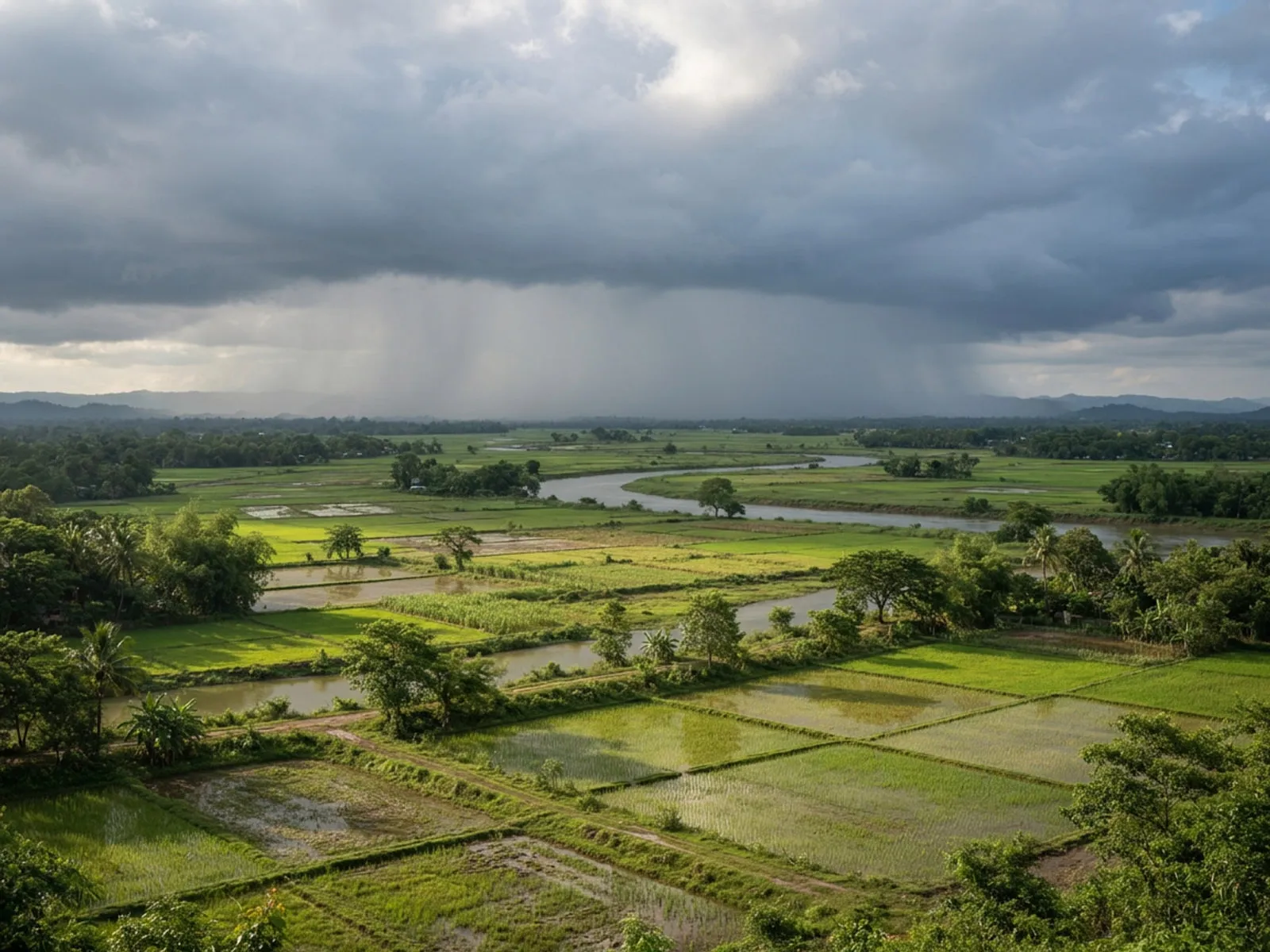
Asia includes high mountain systems and plateaus, large plains, deserts, river basins and extensive island chains. The Himalayas and Tibetan Plateau are part of a highland system quite different from the low-lying deltas and tropical coasts farther south. These physical contrasts help explain why a continent-wide itinerary needs more than a list of cities. National Geographic
A landscape should change how you plan. In mountains, ask about elevation and seasonal access. In a delta or river city, understand which side of the water your accommodation and arrival point occupy. On an island, establish whether the airport, ferry landing and place you want to stay are actually close. In a large metropolitan area, compare districts rather than treating the city label as one location.
Scale can also mislead. A continent map may make a substantial journey look like a small hop. Zoom in until the actual arrival and departure points are visible, then compare the available modes of travel. Keep a broad map for understanding the country and a local map for navigating the last part of a journey. One image rarely does both jobs well.
Do not let a map turn a natural feature into a uniform experience. A river can pass through industrial districts, farmland, protected habitat and dense city neighborhoods. A mountain region can contain large towns as well as remote trails. Choose the particular place and the kind of access you need, then use the larger landscape as context.
Climate and choosing a season
There is no single best month for Asia. Decide which conditions matter most to you: comfortable walking temperatures, reliable boat connections, mountain access, a particular landscape season or avoiding the hottest part of the year. Those preferences may point toward different destinations.
The table is a planning framework, not a forecast or a set of guaranteed travel windows. It deliberately avoids assigning one season to an entire country.
| Setting | Main question to investigate | What a useful check looks like |
|---|---|---|
| High mountains | Is the specific route appropriate in the intended season? | Local forecasts, access notices and qualified advice for the elevation involved |
| Continental interior | How large is the difference between daytime and nighttime conditions? | Destination-level temperature information and suitable accommodation |
| Monsoon-influenced coast | Which direction does the coast face, and when is its wetter period? | The national weather service’s regional climate information |
| Tropical island group | What could interrupt the sea or air connection? | Marine warnings and the actual operator’s service notices |
| Large city | Will heat or air quality change the way you use the day? | Current local forecasts and air-quality information |
| Dry landscape | What does a full outdoor day require? | Local heat guidance, water arrangements and realistic distances |
Climate averages help select dates; they cannot establish conditions during a visit. WMO’s report on 2025 documents damaging heat, floods and drought across Asia, together with continuing glacier loss. Its findings are a reason to use current warnings, not evidence that every destination faces the same risk at the same time. WMO’s 2025 climate assessment, released in 2026
Plan for the weather you could reasonably encounter, not only the weather in photographs. Give an outdoor-focused trip a workable alternative day. Allow a city stay to include rest during difficult conditions. If the main purpose of the journey depends on one weather-sensitive activity, consider whether the dates leave any room to rearrange it.
People history and contemporary life
Asia’s history includes early urban civilizations, long-distance exchange and the development of religious traditions with influence far beyond the continent. These are connections between societies, not evidence of a single shared culture. National Geographic’s human geography overview
Use history to ask better questions about the place in front of you. Why did a settlement develop beside this river? What does a former trading quarter reveal about migration? Which buildings belong to different periods? What is still in daily use, and what is now interpreted as heritage? These questions make a visit more revealing than treating everything old as part of one undifferentiated past.
Contemporary life deserves the same attention. A historic district is also a place where people may work, worship or live. Leave room for ordinary streets, public spaces and local institutions without treating residents as part of an attraction. Ask before taking close photographs of people, and respect restrictions around homes, religious spaces and sensitive locations.
Avoid judging a place against a single expectation of “tradition.” A modern neighborhood does not make a country less distinctive, and a rural community is not obliged to preserve an outsider’s preferred image of it. Look for the choices people are making now as well as the history that shaped those choices.
Religious and cultural conduct should be learned locally. Clothing, photography, shoes, food and access may have specific rules at individual sites. Follow the venue’s instructions and ask when uncertain. A general gesture of respect is useful; a memorized claim that one rule applies everywhere in Asia is much less so.
Economies and the cost of visiting
The World Bank’s East Asia and Pacific overview describes substantial economic transformation alongside continuing development challenges. Its regional grouping includes Pacific countries and is not identical to the Asia or Southeast Asia framework used here. Its South Asia overview separately highlights employment, informality and climate pressures. Neither is a basis for assuming that every place has the same living standards or visitor costs. World Bank East Asia and Pacific, World Bank South Asia
For travelers, national economic descriptions are background rather than a personal budget. The amount you spend depends on the particular city, accommodation, transport, season and activities you choose. A country described as inexpensive can still involve costly transfers or specialized arrangements. A more expensive city may reduce the need for private transport if the chosen neighborhood works well for you.
Build a budget around a plausible week. Include accommodation, food, local journeys, longer transfers, communications and any paid assistance you will need. Add the costs that continue at home if you are away for longer. Keep an allowance for changes rather than using every available dollar to make the initial bookings fit.
Pay attention to what a comparison includes. A room price does not describe the cost of staying somewhere if every meal and outing requires a long paid journey. An inexpensive excursion may exclude equipment or transport. Comparing complete days or weeks is more useful than comparing isolated prices from different styles of travel.
Languages and English in practice
Do not use the word “English-speaking” as a continent-wide convenience rating. The useful question is whether the people involved in a particular task can communicate with you. Booking a room, explaining a food allergy, discussing a prescription and understanding a contract are very different tasks.
Before arrival, save the local-script name and address of your accommodation and any essential destination. Keep an offline copy where possible. Use translation tools for simple exchanges, but seek competent human help when misunderstanding could have serious consequences. If a service is important, confirm the language support with the provider rather than relying on a national reputation.
Learn a few courteous local words even when English is available. Speak plainly, avoid idioms and allow time for an answer. If communication becomes difficult, try a written place name or a clearly stated question rather than increasing volume. A successful tourist transaction does not show that a long-term stay would be equally easy in every setting.
For a longer visit, language learning is part of understanding the place. The aim need not be fluency before departure. Being able to recognize common signs, explain a simple need or greet a familiar shopkeeper can make daily life less dependent on a narrow set of visitor services.
Transportation and a workable pace
Choose a route by its full sequence of connections. A flight is only one part of an airport journey; a train only helps if the station is suitable for the places on either end. Check where each service actually arrives, especially in cities with several terminals or stations.
The most useful comparison is door to door. Include time, cost, luggage handling, physical effort and the consequences of a delay. A slower direct journey can be preferable to a faster service with awkward transfers. Conversely, a flight can preserve energy when an overland trip would consume a large share of limited time.
International borders are separate decisions. Confirm entry and transit requirements for your citizenship and the exact crossing method. A map line, a route mentioned in an old guide or the existence of a railway does not establish that a passenger service is available to you. Avoid making later nonrefundable plans depend on an unverified connection.
For a first regional journey, leave a free margin after major transfers. For a longer stay, prioritize the local journeys repeated most often. The quality of a month in one place may depend more on the walk to groceries and the return trip after dinner than on how quickly you arrived from another country.
Heritage nature and places worth understanding
World Heritage status can be a useful starting point for learning why a place matters. It is not a ranking of enjoyable visits, and the official property may be a complex or landscape rather than a single entrance. China’s Great Wall, for example, represents fortification built and developed across different periods; a visit to one section is not a visit to the entire property. UNESCO’s Great Wall entry
Choose heritage places that connect with the story of your trip. A former capital may help explain a modern country’s historical geography. A trading port may connect architecture with migration and commerce. A natural site may reveal why conservation rules affect access. Read the property’s significance before choosing the particular visit.
The same principle applies outside designated sites. A place does not need an international inscription to be meaningful. Local museums, landscapes and neighborhoods can add context, provided access is welcome and the visit is conducted respectfully. Avoid treating a lack of fame as a promise that a place is empty or available for unrestricted exploration.
For natural areas, use the actual manager’s guidance. Protected status does not guarantee that every route is open or suitable for every visitor. Choose activities that match your abilities and the current conditions, and make transport, waste and wildlife practices part of the decision.
Safety welcome and personal fit
There is no responsible single safety score for Asia. Read current country and regional advice, then consider the specific activities and circumstances of the trip. Road travel, heat, water, unfamiliar terrain and access to help can matter alongside crime and political conditions. Advice written for another nationality can provide context, but your own government and destination authorities are the relevant starting points for requirements that apply to you.
Welcome is also experienced personally. Language, race, religion, gender, disability, sexuality and travel style can affect an individual’s experience. Seek current, relevant guidance rather than assuming that a country’s tourism promotion describes everyone’s circumstances. Ask concrete questions about facilities and services when these are important to your comfort or independence.
A good destination for you is one that offers the interests you value within practical limits you can manage. It need not be the place that sounds most adventurous. If independent travel would create too much uncertainty, a smaller geographic scope or appropriate professional support can make the trip more rewarding.
Slow travel and possible longer stays
Asia offers many kinds of setting for a settled visit, but the right choice is specific: a neighborhood, a season and a lawful length of stay. Start by describing the week you want. How often would you cook? How much would you walk? What would give the week structure? How would you maintain contact with people at home?
Test that ordinary week before making a much larger commitment. A pleasant holiday does not answer questions about ongoing healthcare, residence permissions or the practical consequences of living abroad. Keep those decisions separate from the appeal of a destination. RESTED’s preparation guide for a longer stay abroad is a useful next step for the arrangements that continue beyond sightseeing.
At the continent level, the most productive next decision is usually to narrow the map. Choose one region, compare a small number of countries, then investigate a real base and the season in which you would use it. The more detailed place pages should make that progression possible without requiring you to start the research again at every scale.
Sources checked November 22, 2026. Climate descriptions are general patterns, not forecasts. Regional groupings are Global Guide’s stated editorial convention.
Every place page in Asia (80)
Regions
Countries
- Cambodia
- China
- India
- Indonesia
- Japan
- Jordan
- Malaysia
- Maldives
- Oman
- Philippines
- Qatar
- South Korea
- Sri Lanka
- Taiwan
- Thailand
- Türkiye
- United Arab Emirates
- Vietnam
States and provinces
Cities and towns
- Ahmedabad
- Amman
- Angkor and Siem Reap
- Aso
- Ayutthaya
- Bangkok
- Busan
- Chiang Mai
- Colombo
- Da Nang
- Doha
- Dubai
- Fukuoka
- Fukuyama
- George Town, Penang
- Hạ Long Bay
- Hanoi
- Hiroshima
- Ho Chi Minh City
- Hội An
- Hong Kong
- Hualien City
- Huế
- Imabari
- Ipoh
- Istanbul
- Jeju City
- Kaohsiung
- Keelung
- Kochi
- Kuala Lumpur
- Kyoto
- Macao
- Malé
- Muscat
- Nagoya
- Osaka
- Palawan
- Petra
- Puerto Princesa
- Şanlıurfa and Göbekli Tepe
- Seogwipo
- Seoul
- Siem Reap
- Singapore
- Tainan
- Taipei
- Taitung City
- Tokyo
- Toyama
- Xi'an
- Yogyakarta