Women’s Rights National Historical Park visitor guide
Pair the Seneca Falls visitor center with the Wesleyan Chapel to understand the convention in its setting.

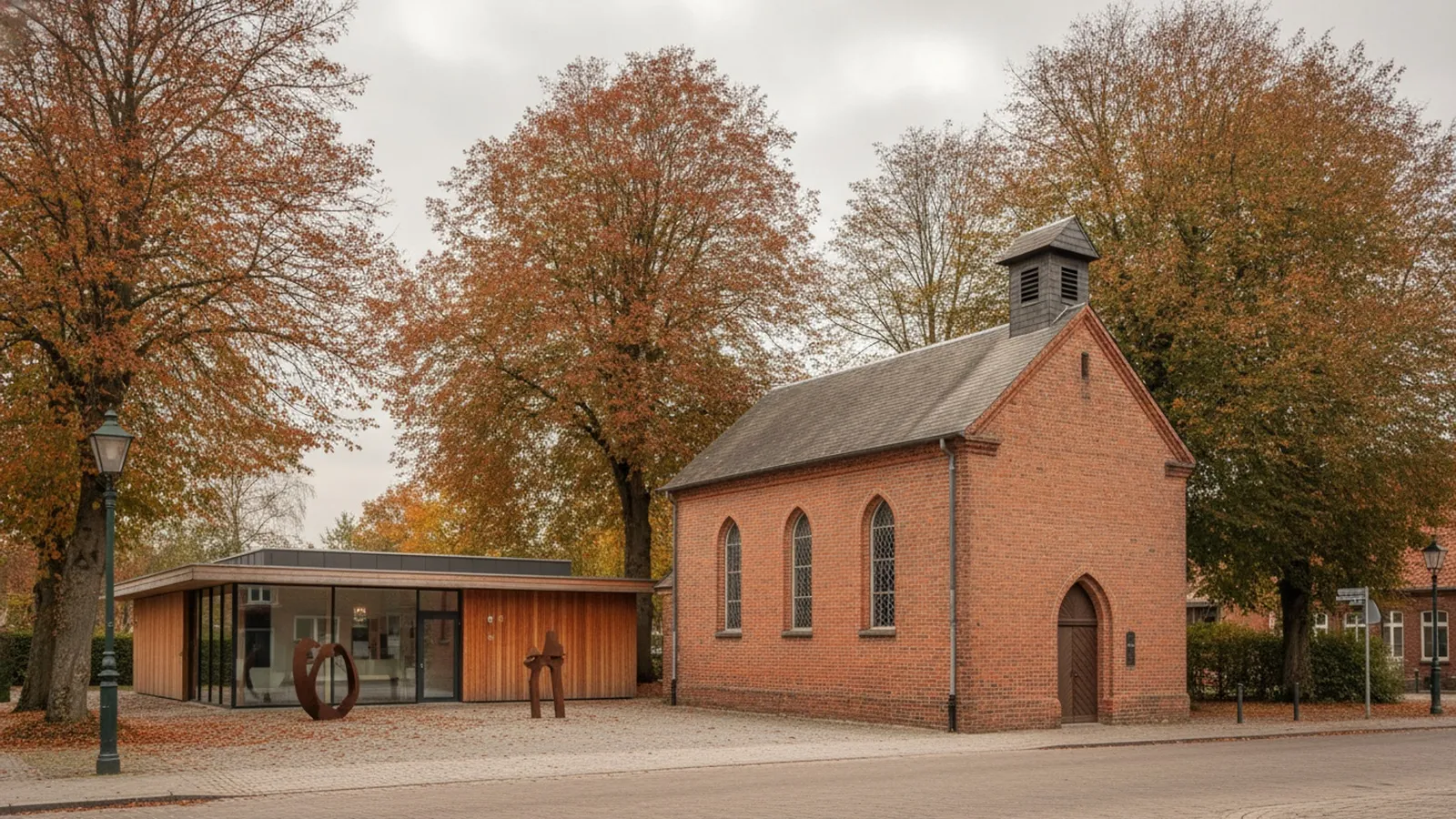
Give the two stops different jobs. The visitor center puts the movement in context. The Wesleyan Chapel gives the story a location and lets you think about what meeting in that space meant. Allow enough time to read instead of just taking a photo.
Park highlights map
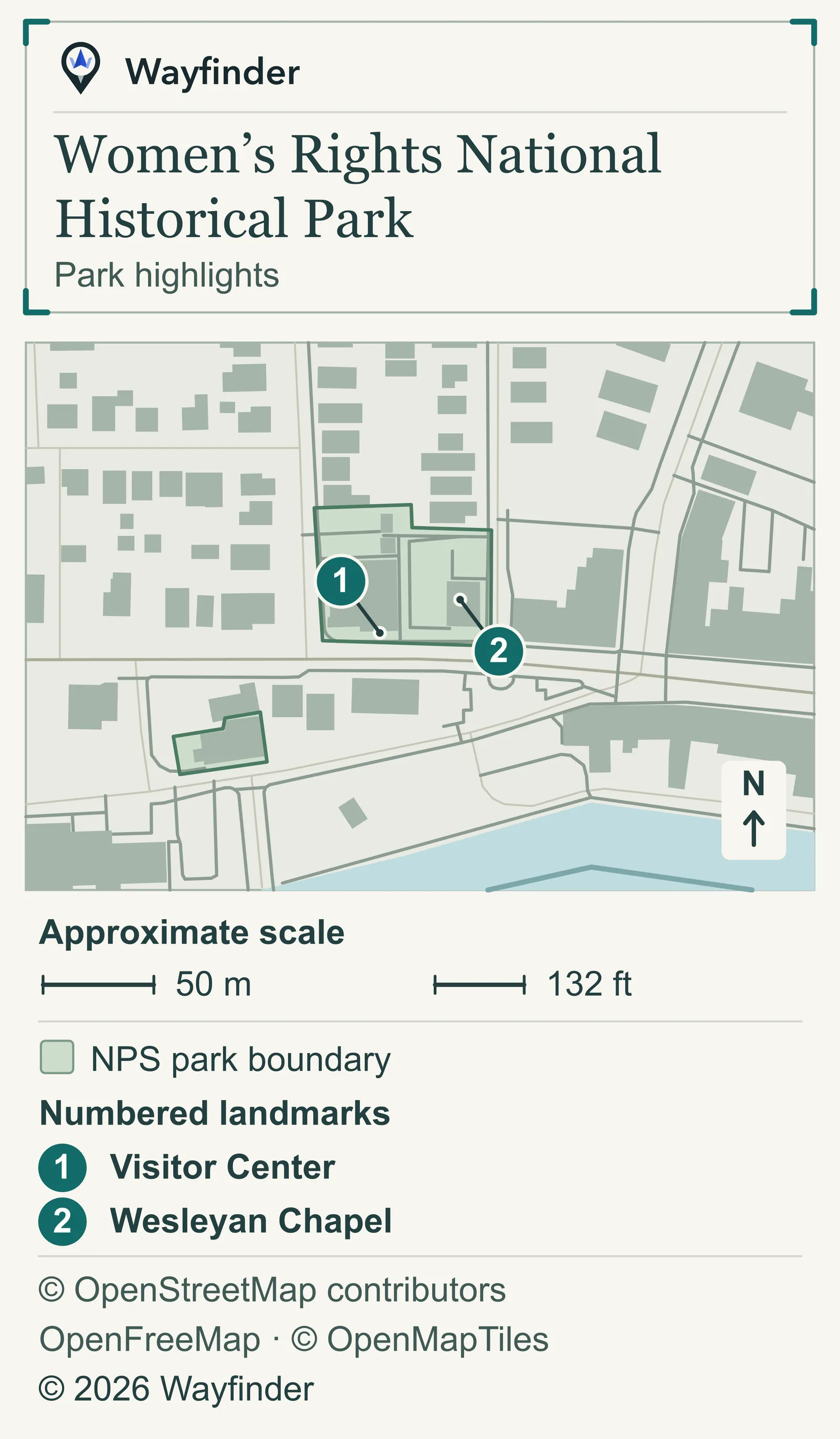
Visitor Center is point 1. Wesleyan Chapel is point 2. Use the map for orientation and the park’s directions for your approach.

Choose your stop
Visitor Center
The visitor center is at 136 Fall Street in Seneca Falls, with a tall white flagpole in front. The Wesleyan Chapel is next door, with Declaration Park between the two (National Park Service · directions, checked November 24, 2026). Choose an exhibit that helps you understand who took part and what they asked for. Ask about chapel access as you arrive, particularly if the inside is important to you.
Wesleyan Chapel
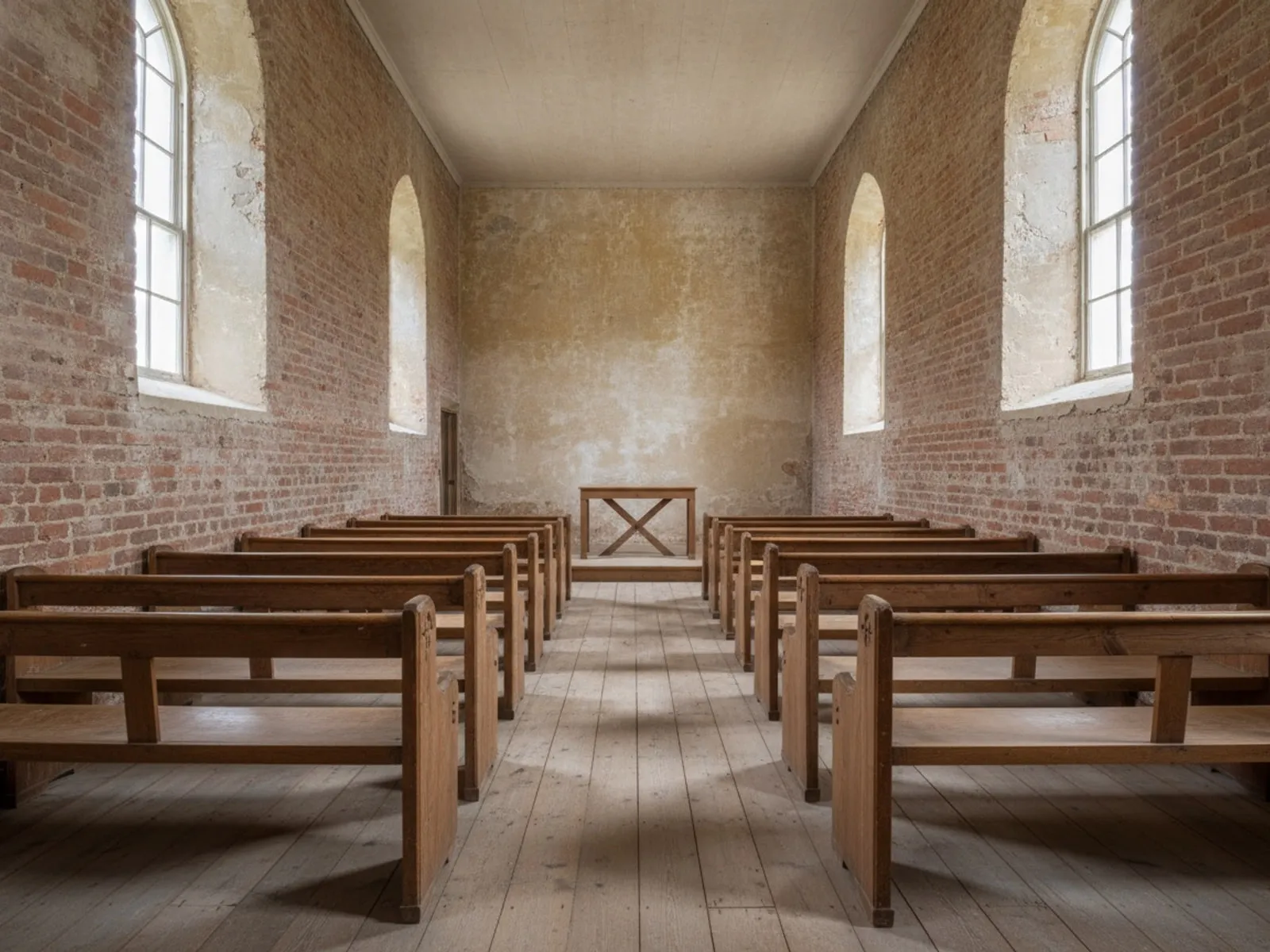
Wesleyan Chapel was the site of the 1848 Women’s Rights Convention (National Park Service · Wesleyan Chapel, checked November 24, 2026). About 300 people met there to protest laws and customs that discriminated against women, and the Declaration of Sentiments was signed there. The park invites visitors to sit in a pew or stand at the lectern and read the declaration. Use the chapel to set what you read in a physical space. The grounds of the park’s historic buildings are open every day, while interiors follow a seasonal schedule (National Park Service · things to do, checked November 24, 2026). Exhibits in the chapel are audio described; ask at the visitor center desk.
Visit choices
Open hours change with the season, so check the operating schedule before relying on an indoor program (National Park Service · chapel and museum access, checked November 24, 2026).

Before leaving
Give the visitor center and chapel different jobs. Read enough interpretation to know why the gathering mattered, then give the chapel a few quiet minutes. If the program schedule changes, use the stop to consider how a public meeting in an ordinary building could reach beyond its walls.
Check the park’s current access notices before traveling.
Common questions
Should I expect every park site to be next to the visitor center?
No. The chapel and visitor center sit side by side on Fall Street, but the Elizabeth Cady Stanton House is at 32 Washington Street in Seneca Falls and the M’Clintock House is in Waterloo. The historic homes open seasonally (National Park Service · directions, checked November 24, 2026).
More on Wayfinder
Choose the museum material you want to spend time with.
Sources
- National Park Service — Visitor center at 136 Fall Street, chapel next door with Declaration Park between; addresses of the historic homes.
- National Park Service — Grounds open every day; interiors on a seasonal schedule; historic homes open seasonally.
- National Park Service — Wesleyan Chapel was the site of the 1848 Women’s Rights Convention, where about 300 people met and the Declaration of Sentiments was signed.
- National Park Service — Check for seasonal hours before relying on an indoor program.
- National Park Service — Current official park alerts and visitor conditions.