Tokyo visitor guide
Group Tokyo sights by station area and choose a base that makes the Haneda or Narita arrival manageable.

Tokyo is easier when you think in station areas. Shinjuku and Shibuya suit a west-side day; Asakusa and Ueno make a separate east-side day. Spend as much effort choosing your hotel’s station exit as deciding between two attractions on opposite sides of town.
What to see
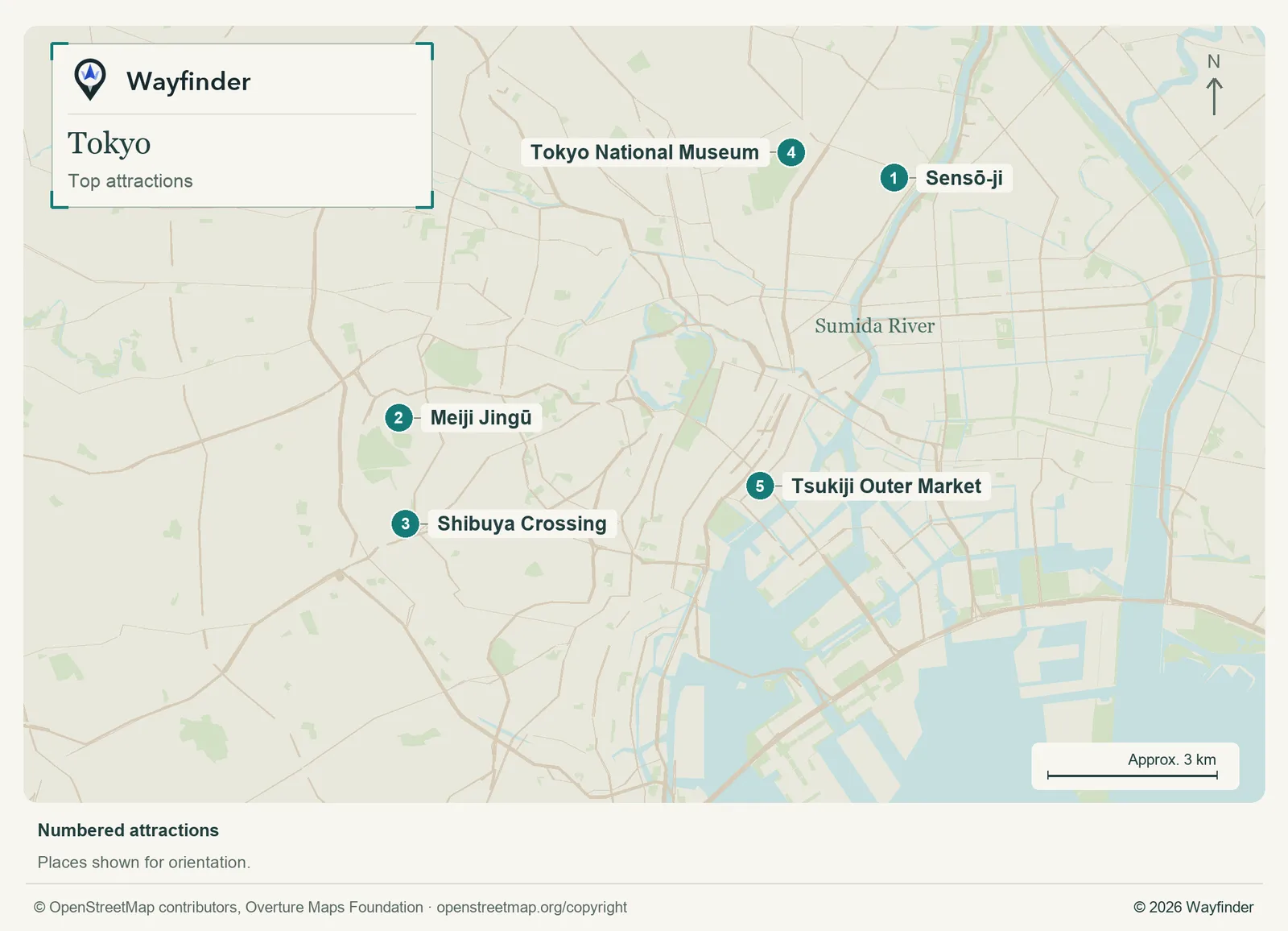
Map: Wayfinder. Map data © OpenStreetMap contributors, Overture Maps Foundation (OpenStreetMap copyright, Overture attribution).
Open attractions map (SVG, full detail)

- Sensō-ji. Start an Asakusa morning at the temple and allow time for the smaller streets after the approach. Leave Ueno for later in the day if the temple area is busy. (GO TOKYO, checked November 20, 2026)
- Meiji Jingū. Use the wooded shrine approach as the quiet part of a west-side day. Check the visiting hours, since some facilities inside close earlier, and match your entrance to your next stop. (Meiji Jingū, checked November 20, 2026)
- Shibuya Crossing. See the crossing at ground level first, starting from the Shibuya Station side. Book an observation deck on its own merits if you want the city view. (GO TOKYO: Shibuya Scramble Crossing, checked November 20, 2026)
- Tokyo National Museum. Choose a collection before heading into Ueno Park. Treat other Ueno museums as separate visits if you enjoy spending time with the objects. (Tokyo National Museum, checked November 20, 2026)
- Tsukiji Outer Market. Go for the market streets and a meal. The wholesale market has moved away from Tsukiji; decide which experience you actually want. (Tsukiji Outer Market, checked November 20, 2026)
Where to stay
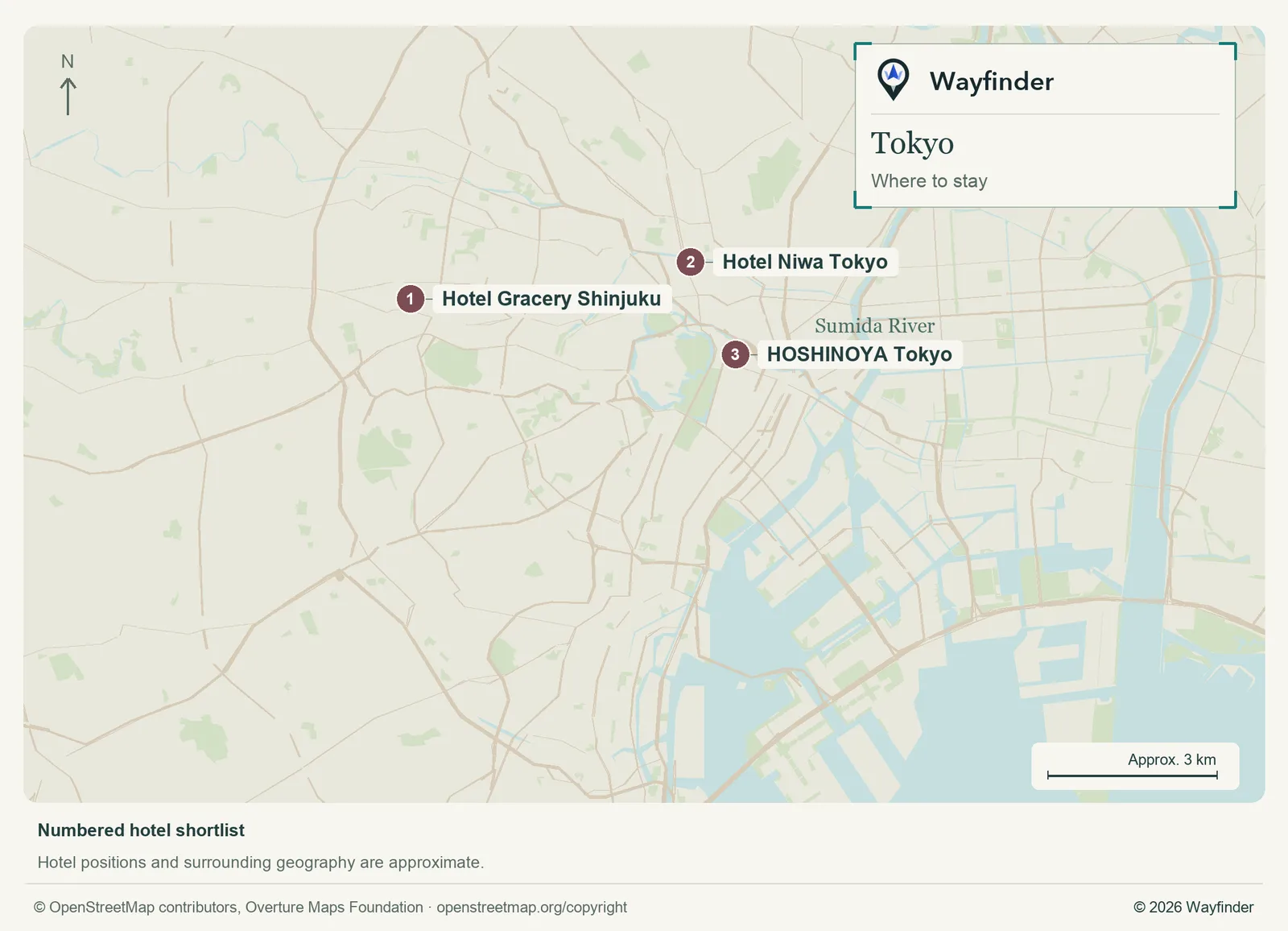
Map: Wayfinder. Map data © OpenStreetMap contributors, Overture Maps Foundation (OpenStreetMap copyright, Overture attribution).
Open hotels map (SVG, full detail)

- Hotel Gracery Shinjuku (Kabukichō, Shinjuku · midrange). A base about five minutes’ walk from the JR Shinjuku Station East Exit if you want Kabukichō and late meals. Check whether the surrounding bustle suits you. (Hotel Gracery Shinjuku, checked November 20, 2026)
- Hotel Niwa Tokyo (Suidōbashi · midrange). Useful for a quieter evening base and a trip balanced across both sides of Tokyo. Compare the actual train from the airport to your station. (Hotel Niwa Tokyo access, checked November 20, 2026)
- HOSHINOYA Tokyo (Ōtemachi · splurge). A high-rise ryokan close to Otemachi subway station and the Tokyo Station area. Compare staying here with Shinjuku if most of your evenings are in the west. (HOSHINOYA Tokyo, checked November 20, 2026)
Getting in and around
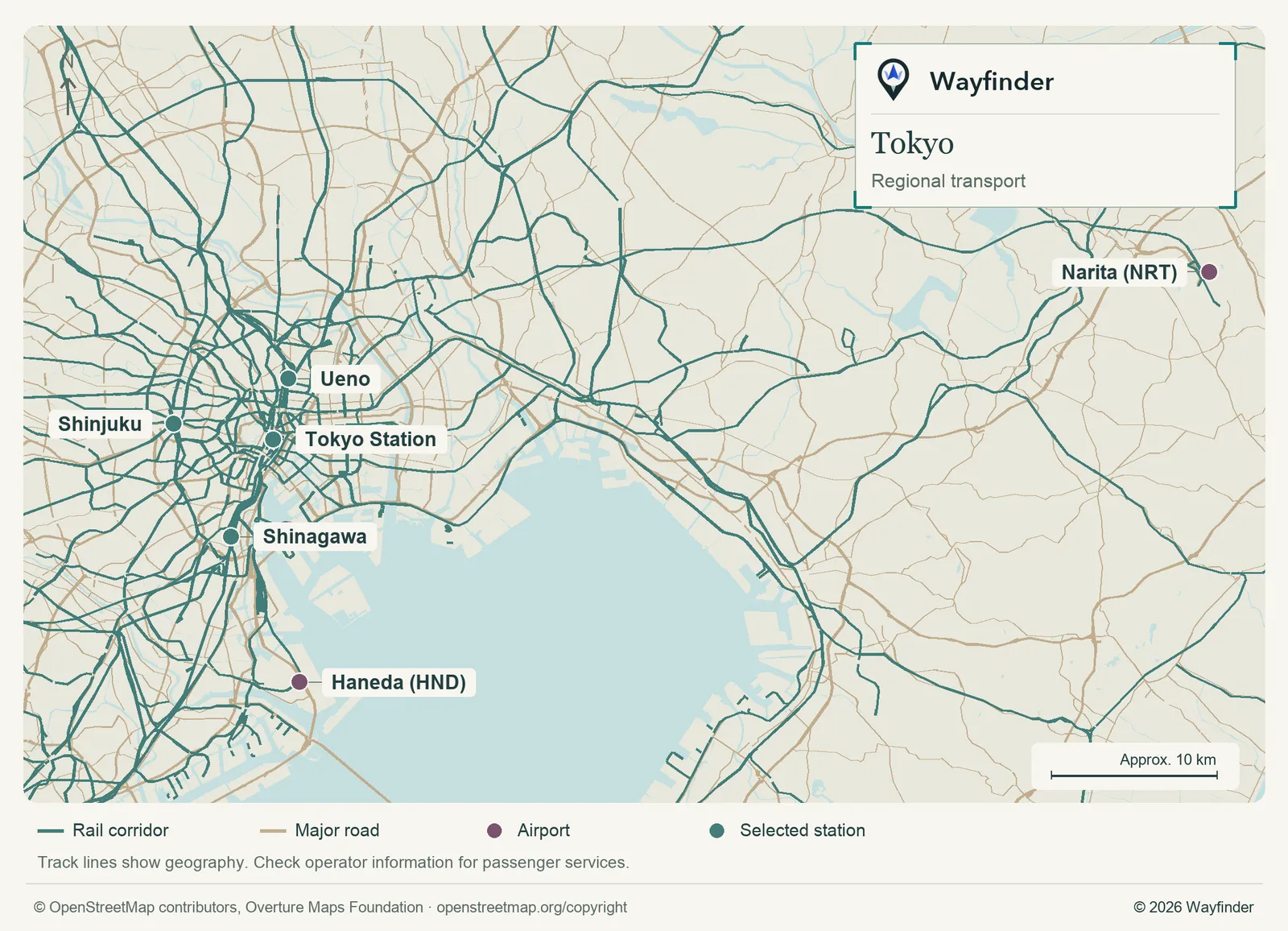
Map: Wayfinder. Map data © OpenStreetMap contributors, Overture Maps Foundation (OpenStreetMap copyright, Overture attribution).
Open regional transport map (SVG, full detail)

Haneda offers Keikyu and Tokyo Monorail routes. Narita has different airport rail choices: compare the Narita Express and Skyliner by which city station they serve and whether you need a final transfer. Use the station nearest your hotel’s entrance rather than choosing a train solely for the advertised speed. (GO TOKYO Haneda, checked November 20, 2026) (GO TOKYO Narita, checked November 20, 2026)
Separate a Shinkansen day from your daily city geography. Check which station your Shinkansen departs from and allow time inside the station. For ordinary sightseeing, JR and the subway networks overlap; use the arriving exit number when available.
Airport to city options
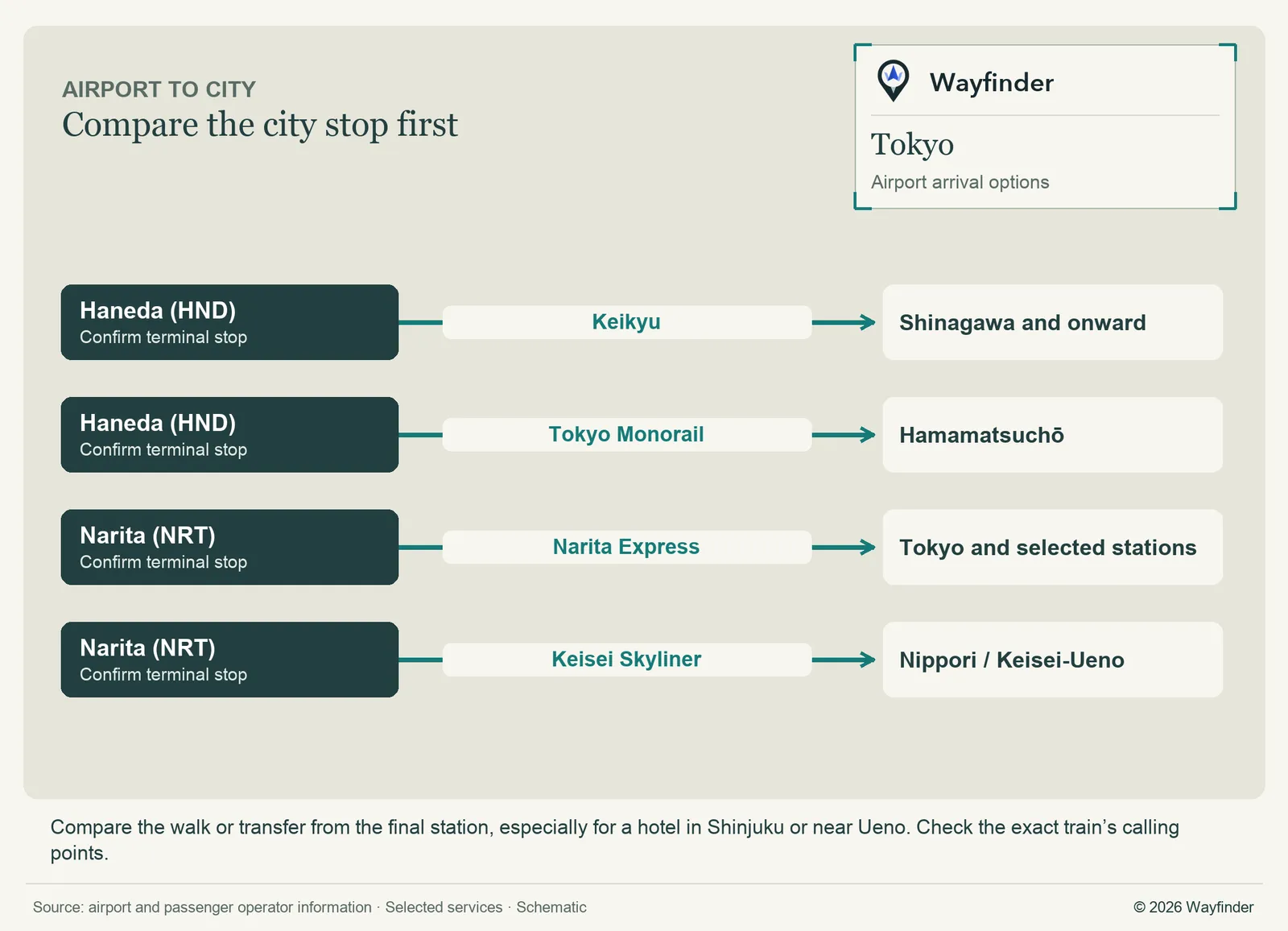
Map: Wayfinder. Map data © OpenStreetMap contributors, Overture Maps Foundation (OpenStreetMap copyright, Overture attribution).
Open airport arrivals map (SVG, full detail)

How to use three days
Try Asakusa and Ueno on day one. Pair Meiji Jingū and Shibuya on day two. Use day three for Tsukiji and a different neighborhood chosen for the evening you want. If you have half a day before a train, spend it near your departure station instead of committing to a cross-town return.
Save the useful station exit
When you choose a hotel, keep its address in Japanese and note which exit the property recommends. Then save a second landmark at street level. This is especially useful around Shinjuku, where arriving at the right station may still leave you on the wrong side of a large complex.
Common questions
Haneda or Narita for Shinjuku?
Compare your actual flight and the last leg to the hotel. Haneda is nearer central Tokyo, while some Narita services can avoid a change for certain destinations.
Should I stay near every major station?
One base is enough for most first visits. Pay attention to the closest useful entrance and whether it has the facilities you need with bags.
More on Wayfinder
- Compare Haneda and Narita from Airline Ace
- See a single act at Kabukiza from Bucketlist
Sources
- GO TOKYO, checked November 20, 2026.
- Meiji Jingū, checked November 20, 2026.
- GO TOKYO: Shibuya Scramble Crossing, checked November 20, 2026.
- Tokyo National Museum, checked November 20, 2026.
- Tsukiji Outer Market, checked November 20, 2026.
- Hotel Gracery Shinjuku, checked November 20, 2026.
- Hotel Niwa Tokyo access, checked November 20, 2026.
- HOSHINOYA Tokyo, checked November 20, 2026.
- GO TOKYO Haneda, checked November 20, 2026.
- GO TOKYO Narita, checked November 20, 2026.