Map of Thailand
Hold Ctrl (or ⌘) and scroll to zoom, or use + and −
Pins mark the town or main visitor area of each place and are approximate.
Country in Southeast Asia
Thailand links the Southeast Asian mainland with the long peninsula extending toward Malaysia. It has coastlines on the Andaman Sea and the Gulf of Thailand, while its northern mountains, central plains and northeastern plateau give the country several distinct geographic settings. Tourism Authority of Thailand: history and geography
That variety is the starting point for a useful visit. Bangkok, a northern city, an archaeological landscape and a southern coast offer different ways to understand the country. They also involve different seasons, transport patterns and daily routines. Choose the part of Thailand that fits your interests and dates before trying to combine its most familiar names.
Thailand can suit a short introduction, a regional journey or a settled stay. The practical test is specific: whether the chosen place supports the days you want to spend there. This page explains the country and its regions; detailed activities belong in experience guides, while transport hubs and longer-term life decisions need their own specialist guidance.
Explore the wider Asia setting, or move directly to the existing Bangkok and Chiang Mai pages for city-level context.
- Regions
- 1
- Cities and towns
- 2
- Place pages
- 5
Regions in Thailand
Cities and towns in Thailand
- BangkokThailand's capital on the Chao Phraya delta: how its riverside old city, commercial districts, rail lines, boats and seasons fit together for a visit.
- Chiang MaiNorthern Thailand's main city, with a moated old center, temple-filled streets and mountains close by, suited to a slow first visit or a longer base.
The country at a glance
Bangkok is the capital. Thai is the official language. The country borders Myanmar, Laos, Cambodia and Malaysia. Its size and north-to-south extent make it unhelpful to describe every destination through Bangkok’s weather or travel conditions. Tourism Authority of Thailand: history and geography, language
For browsing, this guide uses five broad settings: Bangkok and the central plains, the North, the Northeast or Isan, the East, and the South. Within the South, the Andaman and Gulf coasts need separate attention. These are editorial groupings for understanding a trip, not a replacement for provinces or official administrative boundaries.
Start with a map that shows the actual locations you are considering. Decide which are potential bases and which are places to understand through a shorter visit. The distinction matters: being interested in a monument does not necessarily mean that the surrounding city is the right place for a month, and a useful month-long base need not contain the country’s most famous landmark.
| Setting | What to investigate | Main planning distinction |
|---|---|---|
| Bangkok and central plains | Capital-city life, river landscapes and former capitals | Neighborhood journeys versus travel outside the metropolitan area |
| North | Chiang Mai, other regional centers and mountain settings | A city stay is different from a mountain journey |
| Northeast or Isan | Regional cities, archaeology and plateau landscapes | Allow time for distances between the places you choose |
| East | Mainland coastal and inland settings, with islands assessed separately | A mainland base and an island base have different transfer needs |
| South on the Andaman side | Coastal towns, islands and inland landscapes | Check the selected coast and any sea-dependent connections |
| South on the Gulf side | Coastal and island settings facing the Gulf | Do not borrow the Andaman coast’s seasonal assumptions |
Bangkok and the central plains
Bangkok is a useful place to begin understanding contemporary Thailand, but it should be approached as a city of neighborhoods rather than a single sightseeing zone. Choose a base according to the journeys you expect to repeat. A location convenient for one cluster of interests can be inconvenient for another.
The Tourism Authority of Thailand’s Bangkok overview identifies a range of religious and historical places alongside museums, parks and commercial districts. That mixture is more revealing than treating the city solely as an arrival point or a sequence of temples. Tourism Authority of Thailand’s Bangkok overview
A short stay benefits from a limited geographic focus. Give one area enough time for both its well-known places and the streets between them. On a longer stay, everyday convenience becomes more important: the return journey after dinner, a practical food shop and a room comfortable enough for time spent indoors.
The central plains provide a different context. Former capitals help explain the historical geography of the country, while the river landscape encourages attention to water, settlement and transport. Ayutthaya is especially useful for understanding the difference between a modern place, a historical visitor area and an internationally designated heritage property. Those labels do not describe identical boundaries.
When combining Bangkok with another central destination, compare the complete journey. A service reaching a town does not necessarily deliver you to the monument, neighborhood or accommodation you want. Leave the operational details to the relevant transport guide and confirm the final transfer before treating the trip as straightforward.
The North
Chiang Mai offers a city-based introduction to northern Thailand. Its official destination description connects Lanna culture with a wider provincial landscape that includes mountain destinations. The city and the province should therefore be considered at different scales: a stay in the city does not place every northern attraction within a short local journey. Tourism Authority of Thailand’s Chiang Mai overview
For a first visit, decide whether the priority is urban life or the surrounding landscape. A city base can support a slower rhythm, with selected trips beyond it. A journey focused on mountains requires more attention to roads, conditions and suitable local arrangements. Trying to treat both as an uninterrupted list of day trips can leave little time to understand either.
The northern setting is not a guarantee of comfortable air or weather. Seasonal smoke haze can affect Chiang Mai, and current conditions should influence the timing and flexibility of a stay. Travelers whose health is sensitive to air quality should assess the actual destination and seek appropriate advice. FCDO Thailand health guidance
A longer stay should be tested through an ordinary week. Look at where you would buy food, spend quiet time and take part in something you enjoy repeatedly. Do not choose a neighborhood only because it is convenient for a sightseeing day. Confirm the practical journey to the places that would form your routine.
Northern communities should not be approached as exhibits. Where a visit involves a village or cultural activity, choose arrangements that clearly explain consent, access and who benefits. Avoid expectations that residents will perform an outsider’s idea of traditional life or welcome photography without being asked.
The Northeast or Isan
The Northeast broadens a Thailand trip beyond the familiar combination of Bangkok, Chiang Mai and a coast. Its archaeological heritage can be particularly useful for understanding the long history of settlement and religious practice before the best-known royal capitals.
Ban Chiang, in Udon Thani Province, provides evidence of prehistoric settlement, early farming and the making and use of metals. The significance lies in what the archaeological sequence reveals about changing ways of life, rather than in a monumental skyline. UNESCO’s Ban Chiang entry
Phu Phrabat offers another kind of historical landscape. Its World Heritage significance concerns the Dvaravati-period tradition of Sīma stones marking sacred space, together with the adaptation of rock shelters. Understanding that purpose makes the landscape more legible than viewing it only as unusual rock formations. UNESCO’s Phu Phrabat entry
For a regional journey, choose a few places that tell a coherent story and allow for the distances between them. Do not assume that sites mentioned in the same regional paragraph are close enough for one outing. A regional city may be a practical base, but the final connection to an archaeological site still needs its own check.
For slow travel, ask whether the selected base supports your preferred level of independence. Confirm communication for accommodation and important appointments, and investigate local transport before making a long commitment. A quieter visitor profile can be appealing, but it is not in itself evidence that everyday arrangements will be simple.
The East
The East is useful as a separate travel lens even when a broader physical-geography account groups it with central Thailand. The distinction helps readers compare mainland coastal stays, inland places and islands without confusing them with the southern peninsula.
Choose the exact setting before deciding what “near Bangkok” means in practice. A mainland road journey, an island connection and a stay requiring repeated local transfers are different commitments. Evaluate the full arrival day and the local routine separately.
A coastal base can be suitable for a settled visit if it provides the services and pace you want. An island base may offer a stronger sense of separation but also make a change of plan more dependent on transport. Compare these trade-offs directly instead of assuming that one is inherently more relaxing.
Border geography also requires attention. The current regional advice for Thailand identifies concerns around the Cambodia border. Check the exact destination and route against official guidance; neither the region’s name nor a familiar tourism label establishes the current conditions. FCDO regional risks
The South and its two coasts
The southern peninsula should be understood through both coast and inland setting. The Andaman Sea and Gulf of Thailand are different exposures, so a favorable season on one side cannot automatically be applied to the other.
The Thai government’s monsoon explanation distinguishes the generally wetter southwest-monsoon period from the northeast monsoon, which can bring rain to the southeast from the Gulf even as the North and Northeast become cooler and drier. Thai government monsoon guidance
For a coastal visit, decide whether you want a town, a resort setting or an island. A town may make routine errands and varied meals easier to arrange. A resort may simplify some daily choices but require more deliberate planning for independent trips. An island adds the question of how much the stay depends on sea or air connections. These are practical differences, not a ranking of experiences.
Southern Thailand also has a substantial cultural history beyond beaches. Wat Phra Mahathat Woramahawihan in Nakhon Si Thammarat reflects religious and architectural exchange through maritime connections. UNESCO’s account describes influences from several parts of Asia and continuing traditions at the monastery. UNESCO’s property description
Do not extend a familiar resort-area impression to every part of the South. Current official guidance identifies specific concerns near the Malaysia border. Use the named provinces, districts and routes in the advisory rather than applying either reassurance or alarm to the whole peninsula. FCDO regional guidance
Climate and choosing dates
Thailand’s government describes a hot summer from mid-February to mid-May, a rainy season from mid-May to mid-October, and a cooler season it calls winter from mid-October to mid-February. These are broad national patterns, and the cooling it describes is in upper Thailand; they do not establish a single calendar for both southern coasts. Thai government seasons overview
| Part of the trip | Broad pattern to keep in mind | Check before committing |
|---|---|---|
| Bangkok and central inland areas | The hot, wet and cooler seasonal framework is a useful starting point | Daily heat, heavy-rain warnings and the outdoor time involved |
| Northern and northeastern destinations | Cooler conditions are associated with the northeast monsoon; elevation also matters | Destination forecasts, mountain conditions and air quality |
| Andaman-facing coast | Southwest-monsoon exposure matters for rain and sea conditions | The exact island, route and operator notices |
| Southeastern Gulf coast | Rain can continue during the northeast monsoon | Local rainfall and marine warnings rather than an inland calendar |
| A trip covering several regions | The same dates may suit the parts differently | Which region is the main purpose, and where flexibility is possible |
Use the season to select a promising period, then use local forecasts to make daily decisions. A trip built around long outdoor days should have an alternative when conditions are uncomfortable or unsafe. A city stay may be easier to rearrange than a tightly connected series of coastal transfers.
Heat affects pace. Plan the amount of walking you can comfortably sustain, allow places to rest and avoid turning a flexible day into a contest to complete every stop. If a traveler has a health condition that changes their tolerance, discuss the proposed conditions with an appropriate professional before departure.
Rain affects more than whether you need an umbrella. It can change the suitability of a path, the comfort of a transfer or the feasibility of an outdoor plan. Check warnings where the activity takes place, not only at the hotel. If the trip depends on water or mountain access, give conditions priority over a prepaid schedule.
Air quality is a separate question from temperature and rainfall. Review current information for the actual city and preserve options if conditions would substantially limit the stay. A seasonal label such as “cool” should not be read as an all-purpose recommendation.
A historical outline through places
Thailand’s history is easier to approach through several layers than through one uninterrupted story of capitals. Archaeology, religious landscapes, royal centers and modern urban life provide different kinds of evidence. A country guide should help connect them without presenting every place as a stop on the same sightseeing route.
Ban Chiang points toward settled communities and changing technologies. Si Thep’s inscribed property brings together an ancient town and associated monuments linked to Dvaravati artistic and religious traditions. Those places help widen the chronology beyond the later capitals most visitors first encounter. UNESCO Ban Chiang, UNESCO Si Thep
Sukhothai’s monuments illustrate the architecture of a kingdom that flourished in the thirteenth and fourteenth centuries. Ayutthaya subsequently became a major Siamese capital and a center of international exchange. The differences in setting, surviving structures and historical role matter more than deciding which place is the single essential ruin. UNESCO Sukhothai, UNESCO Ayutthaya
The Sukhothai inscription also includes Si Satchanalai and Kamphaeng Phet. These associated towns belong to the same World Heritage property, but they are not one visitor entrance or a compact set of adjacent ruins. UNESCO’s property account
That distinction is useful when deciding how deeply to explore a historical period. A visit to the principal town can provide an introduction; investigating associated places asks for a separate geographic and transport plan. Keep the property’s historical unity separate from the practical question of how much can be visited comfortably. Count the inscription once, while giving each selected component enough context to explain why it matters.
A visit becomes more revealing when you know what kind of evidence you are looking at. Foundations suggest the plan of a building; a surviving tower suggests scale; artifacts can reveal activities that monumental architecture does not. Read interpretation panels carefully and distinguish documented history from a memorable but unsupported anecdote.
Modern Thailand should not disappear behind this historical outline. A contemporary district, a working market or a regional city can help explain the present country. Give them attention without assuming that ordinary life must be turned into a performance for visitors.
Economy and population patterns
The World Bank describes Thailand as an upper-middle-income economy that has diversified from agriculture and become deeply connected to international production and trade. Its overview also highlights population aging and persistent regional inequalities. Agriculture remains important to employment even though the economy extends well beyond farming and tourism. World Bank Thailand overview
These distinctions matter when interpreting the country. Manufacturing, services, agriculture and tourism contribute in different ways. Bangkok and surrounding areas concentrate economic opportunities, while a national average can conceal substantial differences between places. A visitor’s spending in one tourist district is only a narrow view of this wider economy.
Use economic context to avoid simplistic judgments. A lower visitor price does not establish a better quality of life, and a modern commercial district does not represent the circumstances of every household. Equally, a rural setting should not be treated as frozen in the past. Look at the relationship between work, movement and daily services in the place you actually visit.
For longer stays, the practical question is what is available locally and what it costs for your needs. A country-level income label cannot tell you whether an apartment is quiet, whether a particular appointment is accessible or whether your routine is affordable. Verify the larger commitments directly and allow enough time to assess the neighborhood.
Language and English use
Thai is the main language to prepare for. The Tourism Authority of Thailand says many Thais also speak and understand English, more so in Bangkok and the major tourist areas, but that broad statement does not establish proficiency in every setting. This guide therefore does not assign a national English score or promise that ordinary transactions will always be easy. Tourism Authority of Thailand: language
For visitor services, ask whether the person handling your booking can explain the arrangements clearly in a shared language. For an apartment, confirm practical matters such as access, utilities and how problems are reported. For a medical appointment or contract, establish suitable language support before relying on the service.
Keep destinations in Thai as well as English. A written local name and precise location can be more useful than trying several English spellings aloud. Save the information offline, including a way to contact your accommodation if you cannot find the entrance.
Learn a few courteous phrases and use simple sentences. Leave time for clarification, and check understanding when the answer matters. Do not interpret a polite response as confirmation of a complex request. If a translation app produces an uncertain result, simplify the question or seek qualified help.
For a longer stay, modest language learning can improve independence and enjoyment. The aim is to participate more comfortably in everyday exchanges, not to perform fluency. It also helps make the experience less dependent on a small circle of businesses serving foreign visitors.
Culture etiquette and being a considerate visitor
Treat religious sites as places with their own purposes and rules. Read the entrance notices, follow dress requirements and ask before entering an area whose access is unclear. Do not assume that permission to visit includes permission to photograph every person or ceremony.
At an archaeological site, distinguish visitor paths from fragile remains. A low wall may look like a convenient seat while still being part of the protected fabric. Avoid climbing, touching or rearranging objects unless the manager explicitly permits the activity. A photograph is not worth damaging the place it is meant to record.
Respect ordinary privacy as well. A market, neighborhood or village is not an open invitation to take close portraits. Ask, accept a refusal and avoid blocking someone’s work. If a community visit is organized commercially, look for a clear account of who hosts it and how the arrangement benefits the people involved.
Food choices can be explored without abandoning practical needs. Ask about ingredients when necessary and arrange a reliable translation for consequential dietary requirements. Do not assume that a familiar menu label guarantees the same preparation everywhere.
A welcoming interaction should be appreciated on its own terms. It does not prove that every traveler will have the same experience or that no preparation is needed. A useful country assessment combines curiosity with specific checks about the services and environments that matter to you.
Transportation within Thailand
Choose transport for the actual journey and the amount of effort you want to spend on it. Rail, road, air and water serve different purposes; a country overview should not substitute for current operator information. Check the departure point, arrival point and final transfer before booking.
| Mode | When it may fit | What to compare beyond the headline fare |
|---|---|---|
| Intercity rail | A journey where the route and timing suit the trip | Station locations, available accommodation, arrival time and onward transfer |
| Domestic air | Longer distances when time or energy is limited | Airport transfers, baggage, check-in and connection protection |
| Coach or arranged road transport | Places not conveniently connected by rail or air | Total duration, breaks, pickup location and vehicle suitability |
| Local public transport | Repeated city journeys where the network fits | The full walk and transfer, including the return journey |
| Taxi or prearranged vehicle | A direct local trip or a journey needing specific assistance | Clear destination, agreed arrangements and appropriate vehicle |
| Ferry or other passenger boat | An island or water connection | Marine conditions, operator notices, boarding and onward flexibility |
Avoid assuming that a place called a station or terminal is the one used by your service. Large cities can have several departure points, and an old guide may not reflect the current arrangement. Keep the operational detail with the relevant station, airport or route guide so that it can be updated without rewriting the country overview.
For a slower journey, consider whether the travel itself is part of the experience. If it is, give it enough time rather than squeezing it between two full sightseeing days. If it is simply a transfer, compare options by how much usable time and energy remain at the destination.
Road choices deserve attention. UK guidance highlights serious motorcycle accident risks in Thailand. Renting a scooter should not be treated as an automatic solution to inconvenient local transport; establish licensing, competence and coverage for your circumstances before considering it. FCDO safety and security
For boats, follow current marine advice and the operator’s notices. Do not pressure a provider to run in unsuitable conditions or build a critical onward flight around a connection with no margin. The same official guidance identifies risks associated with rough seas, overloading and poor maintenance. FCDO sea-travel guidance
Safety health and practical limits
Thailand needs a regional assessment rather than a simple safe-or-unsafe label. Review current advice for the places and routes you intend to use. At this check, UK advice identifies restrictions in specified southern areas and near the Cambodia border; use the full current guidance for its geographic scope and the advice relevant to your own nationality. FCDO regional risks
The practical safety of a day also depends on the activity. Consider traffic, weather, water and access to help alongside crime or political concerns. Make room to decline or change an activity if the conditions, equipment or explanation are unsuitable.
For health preparation, seek professional advice appropriate to the itinerary and your circumstances. Confirm medication rules, coverage and how to obtain help. English-speaking medical services should be checked at the facility level rather than assumed from a country reputation. FCDO health guidance
Accessibility should be checked through the whole day. Ask about the entrance, steps, surfaces, toilets, transport and where you can rest. A description of a venue as accessible is less useful than a clear account of the route you would use. For a longer stay, apply the same test to groceries, appointments and repeated local journeys.
Personal fit also includes identity and comfort. Travelers may have different experiences depending on gender, sexuality, race, religion or disability. Seek current advice relevant to your circumstances, and ask concrete questions rather than relying on a generalized reputation for friendliness.
Money payments and the cost of a stay
Build a budget from the actual place and travel style. A city apartment, a resort stay and a moving itinerary have different cost structures. Compare complete weeks rather than isolated room prices, and obtain current quotes for the larger commitments.
Ask accommodation providers what is included. Utilities, cleaning, deposits, laundry and local transport can change the total. For a longer booking, understand payment and cancellation arrangements before committing. Keep any tax, residency or contractual questions for qualified advice rather than inferring an answer from a travel guide.
Have more than one practical way to pay. Confirm acceptance with the provider and understand the terms of your own bank or card. The presence of a local digital-payment option does not by itself show that a visitor can use it. Avoid relying on one phone, one card or one assumption for every transaction.
| Budget component | What to price for your own plan | Why it changes the comparison |
|---|---|---|
| Accommodation | The full stay, including required extras | A lower nightly rate may exclude costs paid separately |
| Food | A realistic mix of meals and any cooking | A holiday pattern may differ from an ordinary month |
| Local movement | Repeated journeys, not only arrival | An inconvenient location can add daily expense |
| Regional transfers | Every leg and associated baggage or assistance | Frequent moves can outweigh savings on rooms |
| Connectivity and practical services | The arrangements you actually need | A long stay involves tasks beyond sightseeing |
| Flexibility | Funds available for changes or an early return | The initial booking total is not the full financial exposure |
This is a budgeting framework, not an estimate of current prices. Use current quotes in the currency you will pay, then make a consistent conversion for comparison. Do not treat someone else’s undated monthly figure as evidence that your own stay will cost the same.
Thailand’s World Heritage places
UNESCO’s Thailand list shows nine inscribed properties at the November 21, 2026 check: six cultural and three natural. The newest listed inscription is Wat Phra Mahathat Woramahawihan, Nakhon Si Thammarat, in 2026. Tentative-list entries are separate and are not counted as inscribed properties. UNESCO’s Thailand list
| Inscribed property | Year | A useful reason to understand it |
|---|---|---|
| Ban Chiang Archaeological Site | 1992 | Prehistoric settlement and technological change |
| Historic City of Ayutthaya | 1991 | A former capital and its archaeological remains |
| Historic Town of Sukhothai and Associated Historic Towns | 1991 | A historic kingdom and architectural tradition |
| Phu Phrabat, a testimony to the Sīma stone tradition of the Dvaravati period | 2024 | Sacred space expressed through stones and landscape |
| The Ancient Town of Si Thep and its Associated Dvaravati Monuments | 2023 | An ancient town and related religious and artistic evidence |
| Wat Phra Mahathat Woramahawihan, Nakhon Si Thammarat | 2026 | A southern religious center and maritime cultural connections |
| Dong Phayayen-Khao Yai Forest Complex | 2005 | Forest habitat and biodiversity conservation |
| Kaeng Krachan Forest Complex | 2021 | Forest ecosystems at the meeting of several biogeographic influences |
| Thungyai-Huai Kha Khaeng Wildlife Sanctuaries | 1991 | A large protected forest landscape along the Myanmar border |
The cultural properties are not variations on a single temple visit. Ban Chiang is particularly useful for thinking about settlement and material evidence. Phu Phrabat explains a religious use of landscape. Si Thep connects a town with associated monuments, while Sukhothai and Ayutthaya provide different royal-capital contexts. Choose according to the history you want to understand rather than a desire to complete the list.
The three natural properties also require distinct planning. Dong Phayayen-Khao Yai is a forest complex rather than one interchangeable park entrance. Kaeng Krachan’s significance includes its position among different ecological influences. Thungyai-Huai Kha Khaeng concerns wildlife sanctuaries whose conservation purpose should shape expectations of access. UNESCO Dong Phayayen-Khao Yai, UNESCO Kaeng Krachan, UNESCO Thungyai-Huai Kha Khaeng
Inscription is not an admission ticket or an assurance that every component can be visited. Check the actual manager’s rules, access and conditions. For serial or extensive properties, identify the particular component or entrance before arranging transport. A national list is an orientation tool; the property page should explain its precise scope.
Choosing a base for slow travel
A useful base supports the ordinary week you want, not only the first few days of sightseeing. Start with your routines: food, exercise, social contact, reading, work if permitted, appointments and rest. Then assess the neighborhood against those needs.
| Candidate setting | Why it may suit a longer stay | What to test before committing |
|---|---|---|
| Bangkok neighborhood | A city-focused stay with varied interests | Repeated journeys, noise, heat and the apartment’s suitability |
| Chiang Mai neighborhood | A northern city base with a settled routine | Air quality for the season and access to daily needs |
| Smaller regional city | A more geographically focused stay | Communication, local movement and the services you require |
| Mainland coastal town | A coastal setting without making every departure a sea journey | The actual neighborhood and transport beyond it |
| Island base | A deliberate period centered on one island | Transfer flexibility, services and what happens if plans change |
These are editorial trade-offs, not verified endorsements of specific accommodation or service standards. Test a shorter stay where possible. A room that works for several nights may be unsuitable for a month because of noise, cooking arrangements, storage or the amount of indoor time involved.
Build a week that includes more than tourism. Find a repeatable activity, a manageable way to shop and somewhere comfortable to spend unstructured time. Decide how you would stay in touch with people at home and what would prompt a change of plan. A settled stay is more rewarding when it has a shape without becoming a rigid schedule.
Keep permissions separate from preference. The ability to reserve accommodation does not establish that the intended duration or activities are allowed. Resolve current requirements for your nationality and purpose through the appropriate official channels before making a substantial commitment.
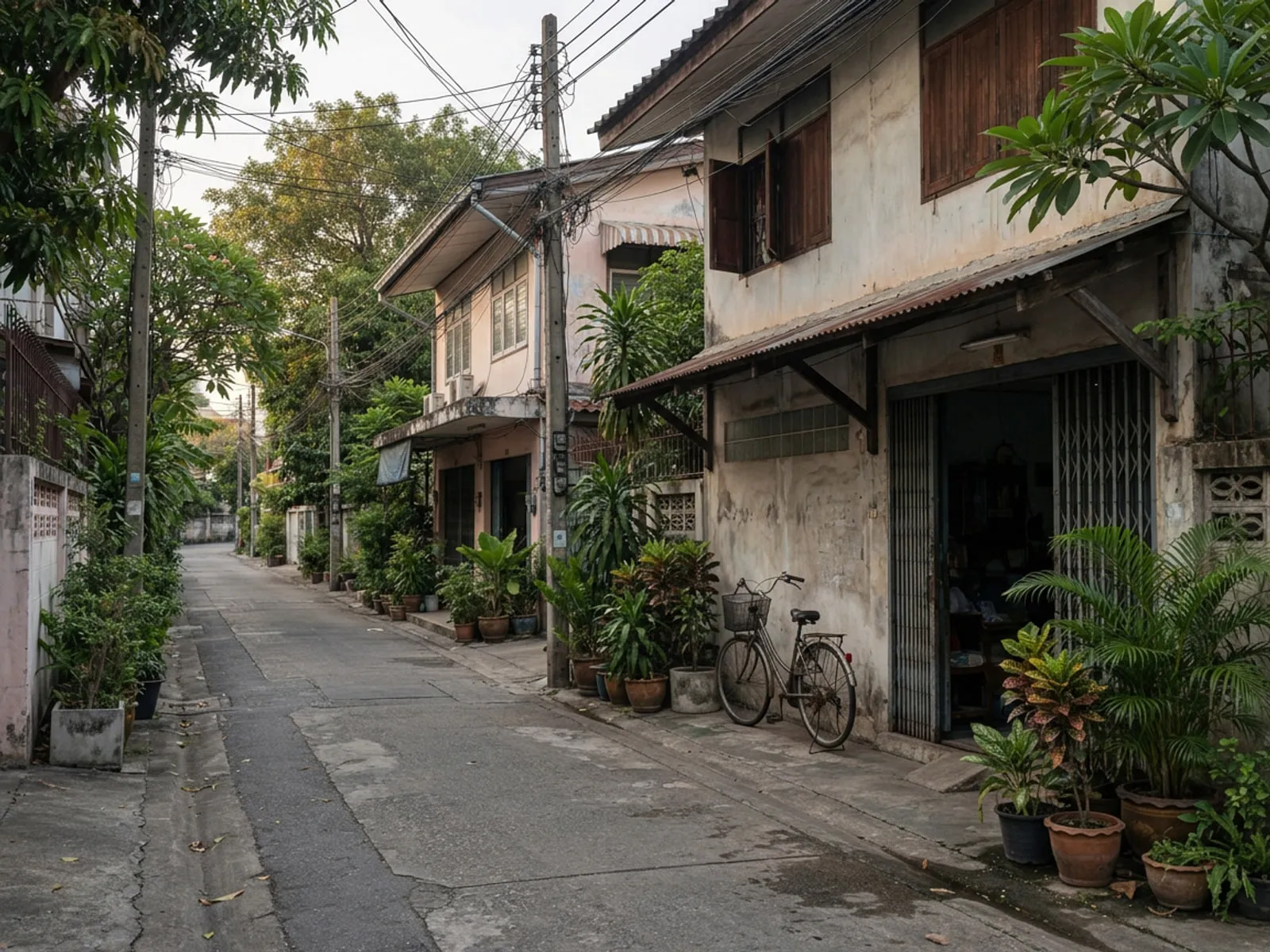
Retirement in brief
Thailand may be worth exploring as a possible retirement setting if a trial stay fits your preferred daily life, climate tolerance and practical needs. A holiday is not enough to establish that fit. Residence permission, healthcare, insurance, tax and continuing home commitments need separate assessment for your circumstances. Begin with RESTED’s guide to preparing for a longer stay abroad and use a trial stay to test an ordinary week before considering a larger move.
Choosing between a city and a regional stay
A city stay and a regional stay answer different questions. In a city, the most consequential choice may be the neighborhood: the room, repeated local journeys and opportunities for a satisfying ordinary day. On a regional journey, the connections between bases become more important. Keep a record of what each proposed move adds, and remove moves whose main purpose is to make the itinerary look more complete.
For companions with different interests, a base that allows independent half-days can be more useful than one requiring everyone to share a vehicle for every outing. Check the return arrangements and communication needs before separating. For a solo traveler, think about where the week will provide comfortable social contact as well as privacy. These are practical choices about the stay, rather than judgments about which part of Thailand is universally better.
Bringing the choices together
For a first visit, choose a small number of settings that contribute different perspectives. A city, a historical place and a coast can make sense if the season and transfers work, but there is no obligation to include all three. A deeper regional visit can be just as rewarding and easier to pace.
For a return or longer stay, narrow the decision further. Choose the actual neighborhood, the season and the routine. Check the larger commitments directly, preserve flexibility around weather and avoid assuming that a previous enjoyable trip settles every practical question.
Thailand becomes easier to understand when its country, region, city and individual-place information remain connected. Use this overview for the broad choice, then move to the relevant place page for local context and to specialist guides for the particular journey or activity.
Sources checked November 21, 2026. Heritage status and official travel advice are date-sensitive. Climate descriptions are broad patterns; the base comparisons and budgeting framework are editorial planning guidance.