Street map of Cetinje
Map data © OpenStreetMap contributors, available under the Open Database Licence. Basemap by Protomaps.
City in Montenegro
Cetinje is a small highland town in southern Montenegro, set at the foot of Mount Lovćen between the Adriatic coast and the capital, Podgorica. Montenegro’s National Tourism Organisation calls it the Old Royal Capital (Montenegro National Tourism Organisation), and the city administration uses the Montenegrin title Prijestonica Cetinje (Prijestonica Cetinje).
A visit centers on history: the monastery, former royal palaces and a cluster of national museums in a compact grid of streets. Lovćen National Park rises directly above the town.
Explore the wider Montenegro page for the country as a whole.
Cetinje at a glance
MONSTAT, Montenegro’s statistical office, counted 14,494 residents in the municipality of Cetinje in the 2023 Census (MONSTAT, Census 2023 releases). That figure covers the whole municipality, which the tourism organization gives as 910 square kilometers. The town itself covers about 6 square kilometers at an altitude of 672 meters (Montenegro National Tourism Organisation).
Cetinje’s tourism office traces the town to the late 15th century, when Ivan Crnojević, ruler of Zeta, moved to a sheltered site at the foot of Lovćen. His heir, Đurađ, set up a printing house there (Cetinje Tourism Organisation). The office calls Cetinje “the city of Museums” (Cetinje Tourism Organisation: culture and heritage).
The town is small enough that its landmarks double as orientation points. Cetinje Monastery sits at the foot of Orlov Krs hill, on the site of Ivan Crnojević’s court (Cetinje Tourism Organisation: culture and heritage). In and around the center, the national tourism organization names the Biljarda palace of Petar II Petrović Njegoš, King Nikola’s Palace, the Art Museum, the Ethnographic Museum and the History Museum, along with a large outdoor relief map of Montenegro (Montenegro National Tourism Organisation). The tourism office adds the Blue Palace and the former Government House, Vladin dom (Cetinje Tourism Organisation).
Above town, Njegoš’s Mausoleum stands on Lovćen, reached by 461 steps, and Lipa Cave lies about 5 km from Cetinje (Montenegro National Tourism Organisation). For museum visits, the tourism office links to the National Museum of Montenegro; check there for current opening times.
Getting around
The center is compact and easy to walk, with the main museums and palaces close together. Lovćen, the mausoleum and the cave need a car, a taxi or an organized trip.
Cetinje has no railway or airport. Montenegro’s tourism organization lists the Budva–Cetinje–Podgorica road among the country’s most important routes, which puts the town between the coast and the capital. The country’s two international airports are at Podgorica, 12 km from the capital, and at Tivat (Montenegro National Tourism Organisation: getting here).
Buses are the main public transport between towns. The tourism organization describes quality local bus transport (Montenegro National Tourism Organisation: getting here). Check bus stations and operators for current lines and timetables.
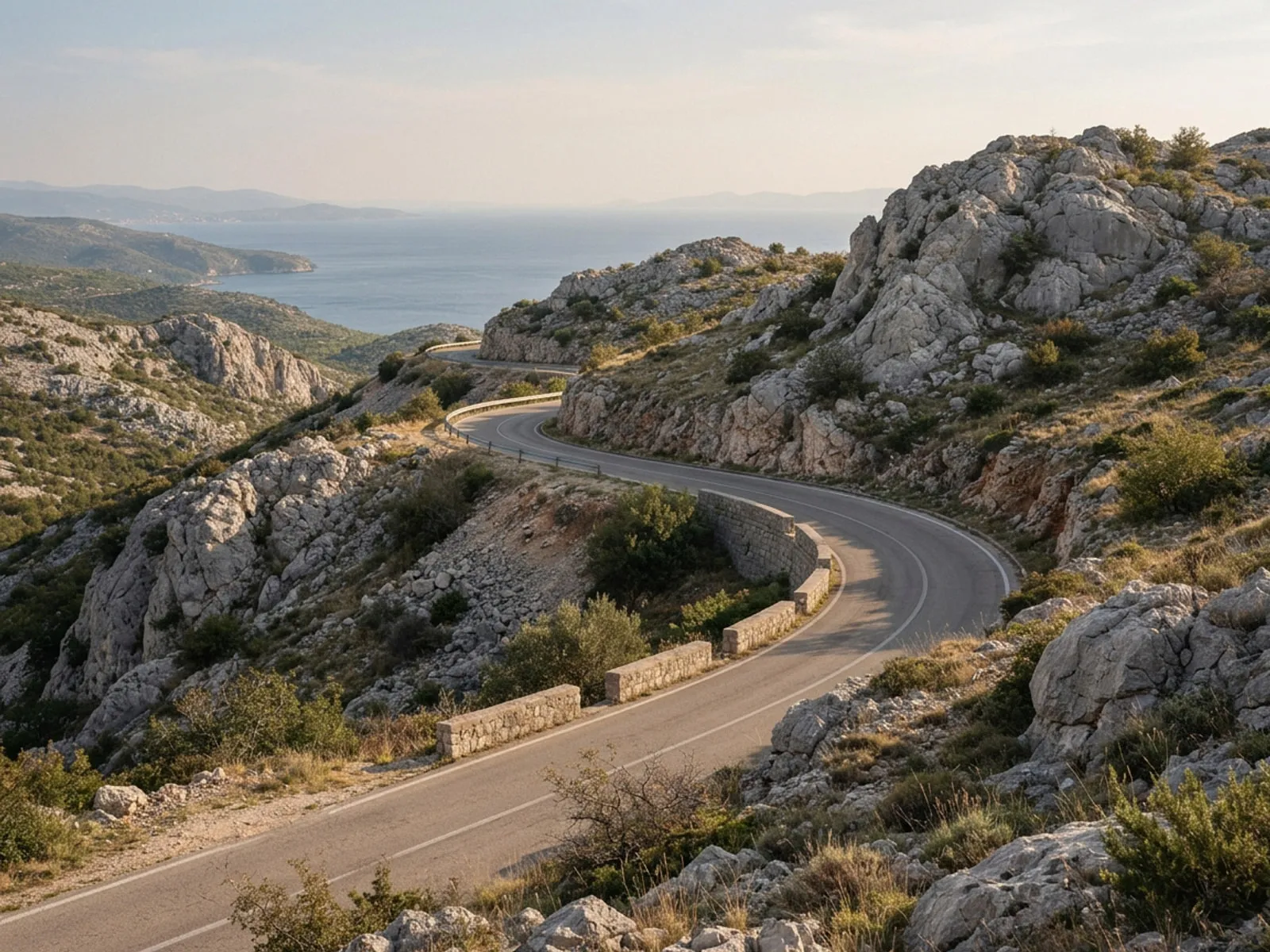
For drivers, the tourism organization’s Sea and Heights panoramic route passes over Lovćen and through Cetinje on its way from Herceg Novi to Bar (Montenegro National Tourism Organisation: panoramic roads). Mountain roads here are narrow and winding, so allow more time than the distance suggests.
Seasons and when to go
At 672 meters, Cetinje sits well above the coast, so expect cooler conditions than on the Adriatic shore. Cetinje’s tourism office promotes spring visits and mentions snow for winter activities (Cetinje Tourism Organisation). Check the Institute of Hydrometeorology and Seismology of Montenegro for current conditions.
Summer is the busiest period, when many visitors come up from the coast for the day. Spring and early autumn suit walking in town and on Lovćen. Winter is quiet, and some mountain roads and trails may be affected by snow. Check Cetinje Tourism Organisation for current festivals and events.
What kind of stay it suits
Many people see Cetinje as a day trip from Budva, Kotor or Podgorica, often combined with Lovćen. That covers the monastery and one or two museums. An overnight stay gives you the town in the evening, when the day visitors have gone, and time for more of its museums.
A longer stay suits travelers interested in Montenegrin history and in walking. The tourism office points to Lovćen National Park, with views of the Bay of Kotor, and to Skadar Lake National Park and Žabljak Crnojevića within reach (Cetinje Tourism Organisation).
The trade-offs are a quiet town with a limited evening scene, cooler weather than the coast, and a reliance on road transport. Accommodation choice is narrower than on the coast.
Explore further
- Montenegro: the country as a whole
Sources checked November 22, 2026. Transport services, timetables and event dates change; confirm with the operators before travel.