Street map of Peso da Régua
Map data © OpenStreetMap contributors, available under the Open Database Licence. Basemap by Protomaps.
City in Portugal
Peso da Régua, usually shortened to Régua, is a river town in northern Portugal on the Douro. The municipality describes it as sitting at the heart of the Alto Douro Wine Region and calls it the capital of the Douro (Câmara Municipal do Peso da Régua).
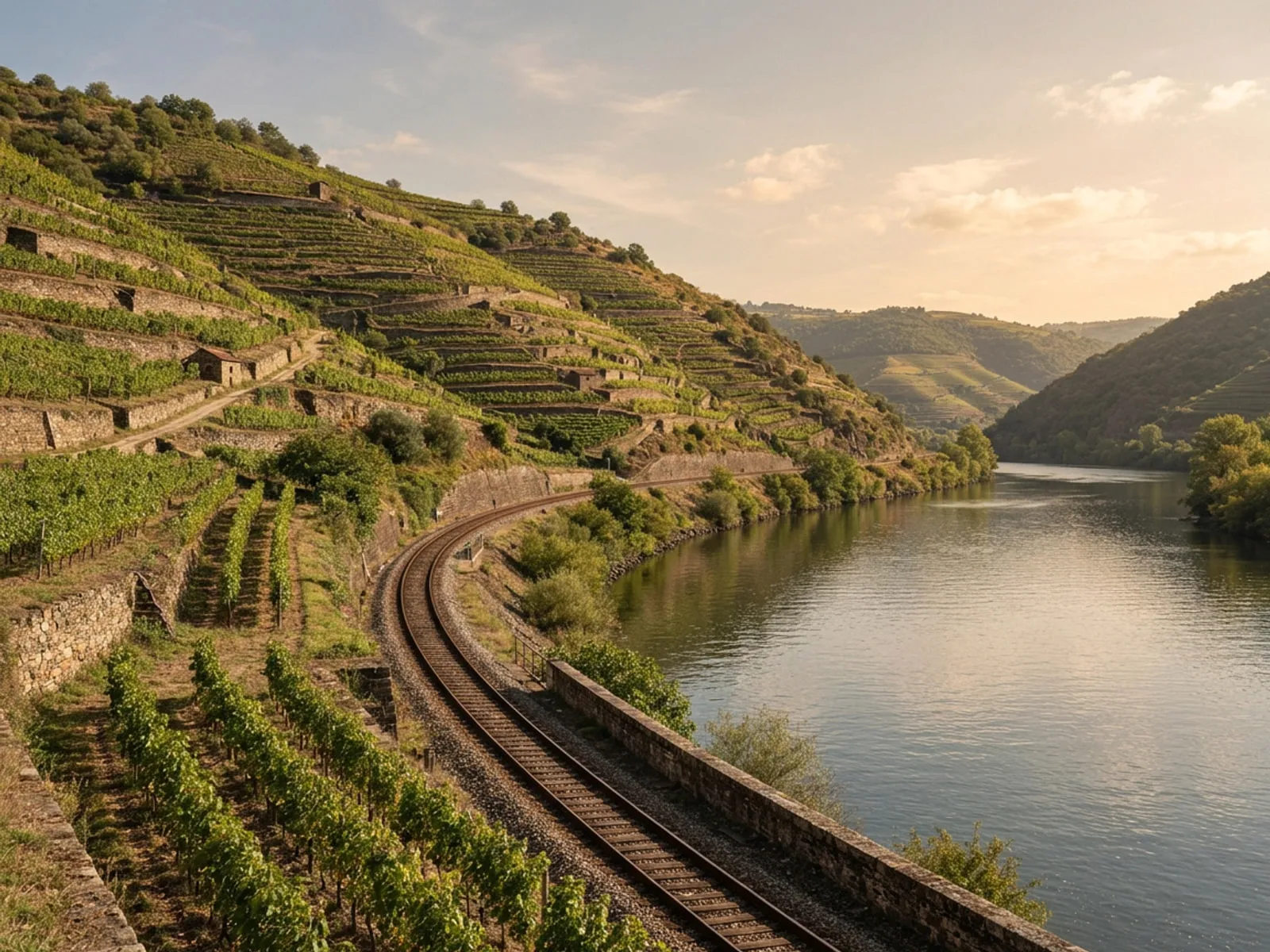
A visit here is about the valley more than the town: terraced vineyards, the river and the railway that runs along it. Régua is where many travelers first meet the wine region, by train from Porto or by boat.
Explore the wider Portugal page for the country as a whole.
Attractions in Peso da Régua
- Peso da Régua’s riverfront and railway arrivalUse the Douro Museum and Régua railway station to make a riverfront visit fit the time you have in town.
Peso da Régua at a glance
The 2021 Census counted 14,540 residents in the municipality (concelho) of Peso da Régua, in the Douro subregion of the Norte region, according to INE figures published on the Portuguese public-administration open data portal (dados.gov.pt, INE Census 2021 by municipality). That figure covers the whole municipality, which the council divides into nine parishes, including the combined parish of Peso da Régua and Godim that holds the town itself (Câmara Municipal: Concelho).
UNESCO inscribed the Alto Douro Wine Region as a World Heritage Site in 2001. It describes a landscape shaped by the Douro and tributaries including the Corgo and the Varosa, sheltered from Atlantic winds by the Marão and Montemuro mountains, with some 24,600 hectares of steep terraced vineyards. It notes that the quality of port wine produced here has been defined and regulated since 1756 (UNESCO World Heritage Centre).
The town is small and faces the river. Its landmarks for orientation are mostly along the water and the rail line. The council’s own list includes the Douro Museum, the Casa do Douro, the town hall building, the 1872 metal bridge (closed to traffic since 1949) and an azulejo tile panel of the Douro line. The Santo António viewpoint looks over the town, the river and Régua’s three bridges, and the São Leonardo viewpoint lies farther out in the municipality (Câmara Municipal: Ver). Wine estates are scattered across the surrounding slopes rather than in town.
The Peso da Régua visitor guide covers how to plan the Douro Museum and the station arrival.
Getting around
The riverfront and center can be covered on foot. Beyond them, the slopes are steep, and the estates and viewpoints generally need a car, a tour or a taxi.
Régua is on CP’s Douro line, which runs 172 km from Porto to Pocinho with 37 stations and halts. Much of the route follows the river, past the vineyard terraces. The railway reached Régua in 1879. CP runs Regional and InterRegional trains on the line, with urban trains as far as Marco de Canaveses (CP: the Douro line). CP also runs MiraDouro, a scenic service with opening windows that runs daily in both directions between Porto São Bento and Régua, Pinhão and Pocinho (CP: MiraDouro).
In town, the council lists two urban bus lines, the Linha Verde and Linha Vermelha, under the Transportes Urbanos do Peso da Régua (Câmara Municipal: urban transport). There is no airport at Régua; Porto, at the western end of the Douro line, is the usual rail gateway.
Seasons and when to go
UNESCO notes that the Marão and Montemuro mountains shelter the valley from Atlantic winds (UNESCO World Heritage Centre), so the weather here can differ markedly from Porto’s coast. In broad terms, summers in the deep valley can be hot and winters cool and quiet. Check the Portuguese weather service (IPMA) for current conditions.
Late spring and early autumn are comfortable times for walking and visiting estates. The grape harvest gives late summer and early autumn their particular character, and that is when the valley is busiest. CP’s Douro Historical Train, five historic carriages hauled by a diesel locomotive in its original colors, runs between Régua and Tua from June to October. CP says its 2026 edition has closed and that details of the next edition will follow (CP: Douro Historical Train). Winter is the quiet period, and some visitor services may have shorter hours.
What kind of stay it suits
Régua works as a day trip from Porto by train, but that leaves little time beyond the riverfront and the museum. One or two nights let you add a viewpoint, an estate visit or a stretch of the line farther upstream.
A longer stay suits travelers interested in wine, landscape and slow rail travel. Pinhão and Pocinho are farther up the same line, and Tua is the end point of the historical train (CP: MiraDouro; CP: Douro Historical Train). The council also lists the Portuguese Inland Way of St. James among its activities (Câmara Municipal).
The trade-offs are summer heat, steep roads beyond the center and a limited evening scene in a small town. Accommodation demand rises around the harvest. Travelers without a car will lean on trains, tours and taxis.
Explore further
- Peso da Régua visitor guide: planning the Douro Museum and the station arrival
- Portugal: the country as a whole
- Peso da Régua on Bucketlist: experiences in Peso da Régua
Sources checked November 22, 2026. Transport services, timetables and event dates change; confirm with the operators before travel.
Before you plan
Decide whether the town or the wider valley is your priority, since viewpoints and estates are spread out. Check opening arrangements for any museum or estate directly before you go.